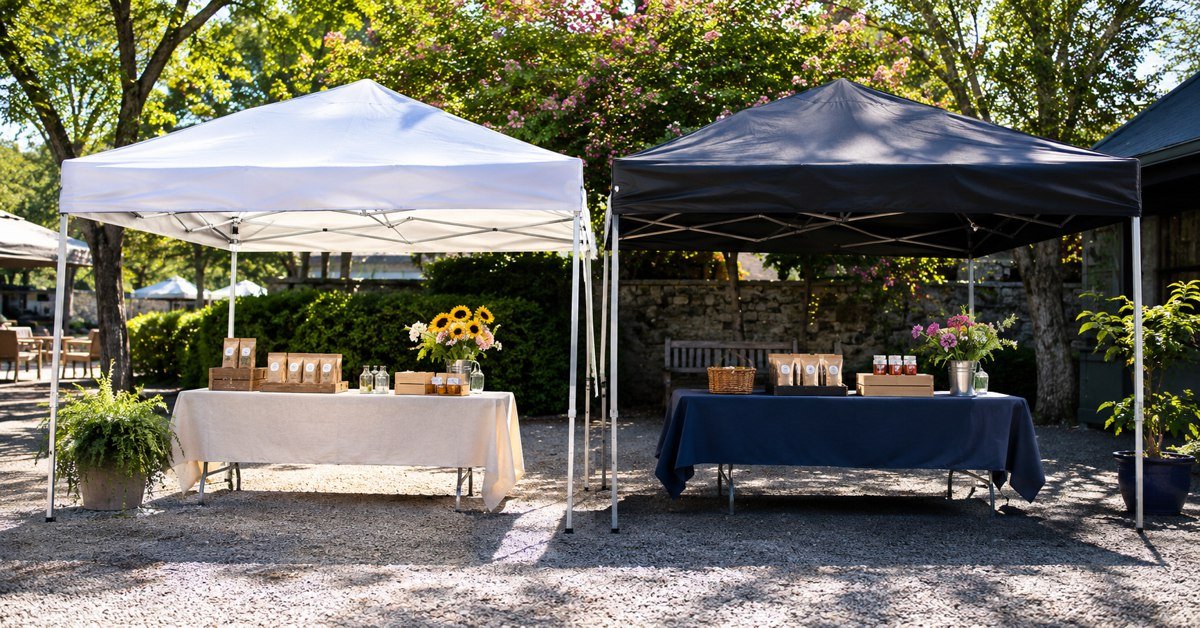
For hot, sunny events, canopy tent colors influence whether the roof absorbs sunlight or reflects it away. A reflective white roof usually heats less than a comparable black roof, although fabric coatings can change that relationship. Black fabric typically creates darker-looking shade while its roof surface can become warmer in direct sun. Choose white for reducing roof heat gain, black for visual darkness, and tested fabric for dependable UV protection.
Color alone does not establish ultraviolet protection, because coatings, weave density, and actual fabric testing matter. A pale roof can brighten a market display while also creating uncomfortable glare against glossy surfaces.
People beneath a canopy experience direct sunlight at its edges, reflected heat from paving, and warmth from the roof. These effects change with the sun’s angle, surrounding surfaces, and whether sidewalls restrict ventilation. Matching the canopy to the setting matters more than choosing the most dramatic color.
In hot locations, prioritize a reflective roof with documented ultraviolet protection and enough open space for ventilation. For market booths, neutral roof colors help preserve merchandise appearance while contrasting signage improves recognition from the aisle. For evening events, prioritize illuminated entrances and readable signs over a roof color that looks dramatic during daylight.
Jump to a specific section on this article
How Canopy Tent Colors Reflect, Absorb, and Transmit Sunlight
Sunlight meeting a canopy roof can be reflected, absorbed, or transmitted through the fabric. Those three pathways explain why roofs with similar footprints can look and feel different. A lighter visible color often reflects more visible sunlight than a darker counterpart. Actual solar behavior also depends on the coating, pigment, thickness, and fabric backing.
Reflectance describes the portion of incoming sunlight sent away from a surface. Absorptance describes the energy retained by the material rather than reflected or transmitted. Transmittance describes how much light passes through to the sheltered area.
Dark dyes generally absorb more visible radiation, which can increase roof surface heating. White roofs can reflect substantial visible light while allowing some light through thin material. Opaque backing can change that outcome without changing the exterior color.
Infrared behavior also matters because sunlight contains more than the colors people see. A dark-looking coating with special infrared-reflective pigments may behave differently from ordinary black fabric. The broader canopy selection process should account for roof construction alongside the color printed on a product label. Never treat a color swatch as a measured solar-reflectance specification.
Ask manufacturers for comparable specifications on the exact roof fabric being considered. Measurements made on a different coating or material cannot predict the same result. Separate surface-temperature expectations from claims about comfort beneath the structure.
Why Black and White Canopy Roofs Reach Different Surface Temperatures
A black canopy top often absorbs more direct solar energy than an otherwise comparable white top. That absorbed energy can raise the roof’s surface temperature during clear, sunny conditions. White fabric tends to reflect more of the incoming sunlight before it becomes heat. Temperature differences narrow or change when fabrics use different coatings or construction.
A hot roof can radiate warmth toward people and objects positioned below it. Airflow removes heat from the roof’s surroundings and reduces local heat buildup. Wind, humidity, and nearby hard surfaces complicate any comparison made outdoors.
Surface temperature is not the same measurement as air temperature at seated head height. A roof can be noticeably hot while moving air keeps the occupied space tolerable. Conversely, overheated pavement can make a white-roof shelter feel uncomfortable. Compare identical canopy sizes at the same time before attributing differences solely to color.
A handheld infrared thermometer measures emitted radiation using assumptions about surface emissivity. Shiny coated fabric may require care when interpreting its reading against matte fabric. Measure the underside and nearby air separately rather than reporting one figure as overall cooling.
Berkeley Lab modeled building roofs under ASTM E1980-11 standard summer weather and medium wind conditions. With 80% versus 20% reflectance, its white roof was 31°C cooler; the building-roof calculation cannot predict canopy temperatures.
What Determines Comfort Beneath Dark and Light Canopy Tents
Comfort beneath a canopy involves radiant heat, moving air, humidity, and surrounding surfaces. Roof color influences only part of that experience for guests. A dark roof can feel pleasant when the site is breezy and shaded nearby.
Light fabric often reduces roof heat gain during long periods of strong sunshine. But a bright underside may reflect distracting light toward faces or displays. A black roof can reduce visual brightness without making the occupied air cooler. Solid walls also alter comfort by slowing air exchange through the shelter.
Place seats away from the sunny perimeter where shifting shade exposes shoulders and tables. Check the relationship between canopy footprint and usable space before crowding furniture against those edges. A larger shaded footprint may improve comfort more than a different roof dye.
In a 2023 study, researchers monitored six Phoenix tents over three July 2022 days using Kestrel Drop sensors. A white-sheet cover increased internal air temperature by 1.11°C versus an uncovered control tent, illustrating ventilation effects. Use sidewalls selectively when glare reduction conflicts with the need for fresh air. These results concern enclosed tents, not the expected air temperature under open-sided pop-up canopies.
For bright daytime events, an opaque white roof can preserve product visibility without relying on artificial display lighting. The roof’s pale appearance alone still cannot establish a measured reduction in the air temperature beneath it.
Judge comfort where people will actually sit, stand, and work.
How Canopy Tent Colors Change the Depth and Appearance of Shade
Perceived shade depth depends on how much visible light passes through the canopy fabric. Black or navy material often creates a darker-looking interior than thin pale fabric. Darkness underneath does not establish how much harmful ultraviolet radiation the material blocks. Lighting conditions can also make a white canopy cast surprisingly strong visual shade.
A translucent white roof diffuses daylight into a relatively bright, soft-looking space. That illumination can help customers inspect labels and products without artificial lights. However, thin fabric may expose bright patches directly beneath the roof.
Dark fabric absorbs or blocks more visible light, so high-contrast objects stand out differently. People may appreciate reduced brightness during screen demonstrations or shaded rest periods. Dark interiors may need additional task lighting to keep products legible.
Look at the fabric from beneath during a sunny midday before making a decision. Check whether seams, windows, and roof joints introduce streaks of direct light. Evaluate eye comfort using the actual layout rather than exterior color photographs alone.
Two roofs in the same color can differ significantly in opacity and lining. A dense pale roof may provide deeper visual shade than a thin charcoal roof.
The fabric specification matters more than the shade name.
Check Light Transmission Through Pale Canopy Roofs
Hold a pale roof sample toward daylight without staring directly at the sun. Look for pinholes, uneven panels, and visible differences near the seams. Then position the fabric above a dark object to judge how much detail remains visible. Repeat the inspection with any lining or coating that belongs to the final model.
An opaque white roof can remain visually bright because it reflects light downward.
The same roof may block transmitted light far better than an uncoated sample.
Record whether the demonstration was performed in sun, cloud, or indoor lighting. Compare fabric samples under matching conditions rather than using photographs taken hours apart. Ask for measured transmission data whenever UV protection is an important purchase criterion.
Assess Shade Contrast Under Dark Canopy Fabric
Dark fabric can reduce visible illumination underneath without eliminating reflected sunlight from the sides. Place a white page and a black object on the display table to assess contrast. Look for readable printing and distinguishable product edges at typical viewing distance. Move the setup toward the opening to see how changing exposure affects visibility.
A dark roof can make unlit signage harder to read in already shaded locations. Guests may need task lighting even when the surrounding event remains bright. Balanced illumination matters more than simply obtaining the darkest possible interior.
Compare the same merchandise beneath light and dark samples using identical positions. If color accuracy matters, evaluate merchandise outside the colored shelter as a reference. Inspect whether the underside has a noticeable hue that changes skin tones. A neutral lining can help where colored fabric otherwise affects a display.
Shade should make an activity easier, not merely make the roof look darker. Consider comfort, visibility, and ultraviolet documentation as separate selection tests. Choose the arrangement that passes each test for the intended activity.
Why UV Protection Requires More Than a Dark Canopy Color
Ultraviolet protection depends on fabric density, construction, treatments, and measured transmission. Darker dyes often absorb additional ultraviolet radiation when other fabric properties match. A pale canopy with certified protective fabric can still perform very well.
UPF describes the ratio of ultraviolet exposure with and without a material barrier. A tested UPF 50 fabric allows about 2% of relevant ultraviolet radiation through under prescribed laboratory conditions. Visible shade darkness cannot replace a documented ultraviolet-performance claim. Look for a consistent specification across roof sections and any optional sidewalls.
Ultraviolet rays can still reach people through open sides and reflections from pavement. Shadows become shorter and shift as the sun moves across the sky. Roof coverage must include the areas occupied when exposure is strongest.
The American Cancer Society advises combining shade with protective clothing and sunscreen because reflected UV can enter open canopies. Sunscreen, protective clothing, and appropriate eye protection remain useful beneath an open-sided shelter. Someone who burns easily should avoid assuming that a covered table is entirely protected. Along open sides, the structure of an open canopy allows direct sunlight to reach seated guests.
Ask whether a stated UPF rating applies to the complete canopy roof. Check manufacturer documents for test conditions and whether coatings are included. Do not transfer a performance label from one model to a different fabric variant.
How Pale Canopy Roofs Affect Glare and Product Visibility
White canopies can create a bright, open appearance that suits many daytime displays. That same brightness may produce distracting reflections on glass, screens, or polished merchandise. The direction of openings and surrounding pavement also influence glare.
Place glossy products where direct sunlight cannot strike them from the open side. Check whether customers face bright sky or a darker backdrop when browsing. A neutral underside can reduce strong color casts across merchandise and faces. Move reflective surfaces before changing the entire shelter color.
Very light roof fabric can soften harsh shadows when its construction diffuses light. However, evenly bright light still creates reflections on shiny products. A pale roof paired with dark display boards can improve contrast in some layouts.
Use a phone screen or printed label to test readability at typical customer positions. Walk the perimeter at the expected event hour to identify glare entering sideways. Try matte signage where reflections obscure small text or important product details. Choose shade placement first, then use color to refine the visual environment.
A white roof generally suits daytime product displays when merchandise benefits from bright, relatively neutral illumination. Manage reflections with matte backdrops, careful booth orientation, and adjustment of overhead lighting angles. Choose a darker underside for screen demonstrations only after testing whether supplemental task lighting remains sufficient.
Choosing Canopy Colors That Stand Out at Crowded Events
At markets and festivals, visibility depends on contrast against neighboring roofs and backgrounds. A bright saturated canopy may be easier to distinguish from rows of white shelters. Neutral roof colors can still work when signage is clear and well positioned.
Survey the event setting before choosing a color intended to attract attention. Look for repeated hues in neighboring vendor tents and nearby buildings. For black roofs, test white or yellow signage; for white roofs, select dark lettering with sufficient contrast. Color alone should not replace large, legible signs placed within permitted display areas.
A white canopy can provide a clean backdrop for strongly colored graphics. A dark canopy often benefits from lighter lettering and controlled display lighting. Busy printed patterns may compete visually with a store name or event direction sign.
Across crowded events, the standard market booth footprint influences where visitors first see the roof and branding. Check organizer requirements before choosing a color reserved for staff or emergency services. Make clear pathways and readable identification more important than visual novelty. Evaluate the booth from across an aisle rather than only from directly underneath.
People should recognize the shelter quickly in both open sunshine and partial shade. Consistent signs help more than subtle differences among similar neutral colors.
Comparing Dark and Light Canopies After Sunset
After sunset, roof color affects how electric light appears against the shelter. A pale canopy can bounce some artificial light into the occupied area. A dark canopy generally absorbs more visible light and may look less bright.
People walking nearby need to distinguish entrances, legs, and guy lines clearly. Place lighting where it illuminates obstacles instead of shining into guests’ eyes. Check the differences between open canopies and enclosed tents when planning overnight or weather-sensitive use. Do not assume a darker roof automatically gives better privacy after lighting turns on.
Strong internal lighting may silhouette occupants against translucent sidewalls after dusk. Dark fabric can conceal that silhouette better when its material is sufficiently opaque. Actual visibility depends on the contrast between inside and outside light levels.
Secure cords and lighting accessories without damaging the canopy or blocking exits. Avoid heat-producing fixtures placed too close to fabric or frame members. Keep illuminated signage legible for visitors approaching from different directions.
For evening events, test the complete shelter at the intended lighting level. A visually striking daytime color may behave differently at night.
How Coatings and Fabric Backings Change Color Performance
Two canopies labeled white can have different optical properties because their coatings differ. Silvered or opaque backing can reduce light transmission through otherwise pale material. Coatings also influence water resistance, surface appearance, and manufacturer care instructions. Do not infer every coating’s performance from the color on the outside.
Inspect whether the roof is single-layer fabric, lined fabric, or coated polyester. A coating specification should identify the exact model and roof variant. Ask whether quoted ultraviolet protection applies after normal cleaning and use.
For enclosed displays, the Eurmax USA 10×10 Pop Up Canopy Tent with 4 Zippered Removable Walls (White) illustrates modular walls. Its listed package contains four removable zippered walls, allowing users to change the enclosure’s openness. Closing walls can restrict airflow independently of the roof’s exterior color or its reflective coating. Keep adequate openings for both comfortable airflow and safe guest movement inside the temporary shelter.
Compare documented roof thickness and fabric treatments only across equivalent products. A denier value describes yarn mass, not a direct measurement of UV protection. Check seams and panel joins for light leakage that broad fabric claims overlook.
A silver underside may appear cooler in a photograph without proving lower air temperature. Manufacturer statements about protection should remain distinct from independent field measurements. Look for testing details rather than relying on terms like premium or heavy-duty.
Which Canopy Tent Colors Suit Hot, Cool, and Mixed-Use Settings
Choose white or beige with documented UV protection for exposed, hot-climate daytime events. Choose black or navy when reducing overhead brightness matters more than limiting solar heating of the roof. For color-sensitive merchandise, select neutral white or gray and check whether the roof changes product hues. For mixed weather, give wall ventilation, roof opacity, and anchoring requirements priority over cosmetic color preferences.
Markets with detailed product displays often benefit from neutral, even illumination. Sports sidelines may prioritize roof opacity and convenient visibility for participants. Ceremonies commonly favor colors that coordinate with decorations and photo backgrounds.
Photographers should test whether roof fabric shifts the apparent color of skin and merchandise. Outdoor vendors should check how sunlight moves across customer-facing shelves. Event organizers may impose rules for colors or reflective graphics.
Choose between black and white using the expected exposure time and activity. Inspect a manufacturer sample against a strong light before trusting advertising photographs. A darker roof may reduce glare while increasing radiant warmth on sunny days.
For a dark event shelter, examine the roof underside and reflective backing before concluding that shade will feel comfortable. Evaluate fabric samples side by side at the same hour rather than comparing photographs taken under different lighting. Keep attachment compatibility and anchoring instructions separate from color preferences. When a location has varied conditions, adjustable sidewalls may matter more than roof color.
| Main use | Color starting point | Check before choosing | Potential drawback |
|---|---|---|---|
| Strong midday sunshine | White or pale roof with a reflective finish | Solar reflectance and UV performance of the exact fabric | Thin pale material may transmit too much light |
| Screen demonstrations or overhead glare | Dark roof or darker underside | Screen readability, available task lighting, roof heat gain | Dark surfaces can become hotter in direct sun |
| UV-sensitive daytime seating | Either color with documented UV-rated fabric | UPF or UV-effectiveness information for the actual roof | Light can reach occupants through open sides |
| Color-critical merchandise or photography | Neutral white or gray roof | Color casts on real goods in the expected daylight | Saturated fabric can change perceived product colors |
| Crowded markets and vendor aisles | A roof contrasting with surrounding tents | Organizer color rules and readable high-contrast signs | Distinctive roof color alone does not ensure legibility |
| Evening events or changing conditions | Either color with a planned lighting layout | Illuminated entrances, cables, sidewalls, and ventilation | Dim corners or backlit walls can create visibility problems |
Test your preferred fabric in its real location before buying equipment for recurring events.
Frequently Asked Questions about Canopy Tent Colors
Does a Black Canopy Tent Retain Heat After Sunset?
Yes, a black canopy can remain warm briefly after direct sunlight ends. Its cooling rate depends on air movement, construction, and the temperature of surrounding surfaces. Thin fabric generally stores much less heat than masonry or asphalt nearby. A warm roof surface therefore does not mean the whole shelter remains unusually hot.
Once sunlight disappears, radiative cooling and wind can lower the roof temperature. Cloud cover changes how quickly surfaces lose heat to the night sky. Enclosed sidewalls may slow the exchange of warm air with cooler surroundings.
Check the sheltered air at seated height rather than touching the roof alone. Open suitable sidewalls if occupants need more airflow after a sunny afternoon. Avoid assuming color determines nighttime warmth when weather conditions dominate.
Which Canopy Tent Colors Fade Fastest in Direct Sunlight?
Fading speed depends more on dye chemistry, coatings, exposure, and maintenance than color name alone. Certain saturated or dark pigments may show visible fading particularly clearly over time. Other formulations can retain their appearance much longer under the same conditions. Ask for colorfastness test results specific to the fabric and finish being considered. Clean and dry the roof according to its care label to avoid additional discoloration.
Do Canopy Tent Colors Affect How Insects Approach a Shelter?
Color may influence how some insects perceive and approach objects, but species respond differently. Food odors, standing water, human activity, and lighting often matter more at an event. No single canopy color reliably prevents bites from mosquitoes or other pests. Manage food waste and remove stagnant water before treating roof color as protection.
Evening lights can attract certain flying insects regardless of roof color. Place lights thoughtfully while keeping entrances and work surfaces visible. Use physical screening when insects are a substantial problem.
Which Canopy Colors Show Dirt and Stains Most Easily?
White and very pale roofs tend to reveal dark soil, leaf marks, and mildew stains. Black fabric may conceal some dirt while showing pale dust and dried water residue. Tan and gray can make everyday marks less conspicuous in some settings. Visibility of stains also changes with fabric texture and the direction of light.
Check the cleaning instructions before choosing a color primarily for appearance. Some protective coatings require gentle washing and prohibit harsh chemical cleaners. A clean roof usually maintains a more consistent appearance than a neglected dark one.
Remove debris before folding so abrasive grit does not rub against the finish. Dry the material completely before storage to reduce moisture-related staining. Inspect high-contact corners and straps where repeated handling leaves marks.
Can Red or Blue Canopy Fabric Change the Appearance of Displayed Goods?
Yes, colored fabric can change the light reflected onto merchandise and skin. A red roof may warm the appearance of neutral materials beneath it. A blue canopy can create cooler-looking highlights when light passes or reflects through fabric. The effect depends on the fabric’s transparency, lining, and surrounding daylight. Compare goods in neutral daylight before deciding whether a color cast is acceptable.
Food, textiles, and art can be especially sensitive to perceived color changes. Use neutral backdrops or supplemental lighting when accurate color presentation matters. Check actual objects rather than judging only the roof’s exterior color.
Are White Canopy Tents Harder to Keep Clean Than Dark Ones?
White roofs often make contamination easier to see, but they are not automatically harder to clean. Fabric finish and stain type affect whether a mark can be removed. Dust may stand out more on black roofs than on off-white ones. A removable roof can simplify cleaning when its manufacturer permits washing.
Brush off loose debris before it becomes embedded in damp fabric. Use approved mild cleaning products rather than stripping protective treatments. Avoid packing any roof while it remains wet from washing or rain.
Persistent discoloration may come from coating damage rather than surface dirt. Test unfamiliar cleaners on a small concealed section first. Keep transport bags free of grit that transfers onto folded panels.
Choose a care routine you can maintain after every event.
What Canopy Tent Colors Work Best for Outdoor Product Photography?
Neutral white or gray canopies often provide a useful starting point for product photography. Their reflected light may be easier to correct than a strong colored cast. However, very bright white roofs can create distracting highlights on reflective objects. Test exposure and white balance using the actual merchandise before shooting.
Can a Dark Canopy Roof Be Paired With Light-Colored Sidewalls?
Yes, dark roofs can pair with light sidewalls when the attachment system is compatible. The combination may reduce overhead brightness while brightening the occupied sides. Light walls may also transmit or reflect additional daylight depending on construction. Always use components approved for the exact canopy frame and roof model.
Keep at least the openings needed for comfortable airflow and emergency movement. Inspect seams and hardware rather than relying on matching nominal dimensions. A fabric color match does not guarantee correct wall height or attachment points.
Which Canopy Tent Colors Suit Weddings and Ceremonies?
White and ivory canopies often coordinate easily with ceremony flowers and light-colored linens. Neutral colors also make it simpler to adapt decorations between event themes. Dark roofs can create striking contrast for evening ceremonies and stage lighting. Choose the atmosphere guests will experience from underneath, not just exterior photographs.
Inspect shade position during the actual ceremony hour before arranging the seating. A pale roof may brighten faces but can also reflect light into photographers’ lenses. Ensure the selected fabric provides appropriate UV protection for the planned daytime exposure.
Check venue restrictions on canopy colors and anchor placement before confirming designs. Keep guest circulation and accessibility clear under decorative sidewalls or hanging fabric. Use lighting tests at dusk to avoid dark corners around entrances.
How Can I Reduce Canopy Color Fading During Storage?
Clean the fabric gently and dry it fully before placing it inside its bag. Store the folded roof away from direct sunlight and persistent moisture. Avoid hot storage spaces where coatings and adhesive components may degrade prematurely. Follow the manufacturer’s folding sequence to reduce abrasion along colored creases.
Separate sharp frame hardware from fabric when packing the complete shelter. Keep the storage bag off damp floors and away from chemical containers. Inspect the roof periodically if it remains packed through a long season.
Use a breathable storage arrangement when the manufacturer recommends it for the material. Do not seal wet fabric inside plastic because trapped moisture can promote mildew. Repair or replace damaged protective layers before the next event when instructed.
Careful storage protects both appearance and the function of the roof fabric.
Ready to Explore Canopy Tent Colors?
Choose white or beige for sunny daytime use when verified coatings and UV ratings meet your protection needs. Choose black or navy to reduce glare, while expecting greater roof heating than with comparable reflective fabric. For market displays, neutral roofs and high-contrast signs often balance product clarity with long-distance visibility. Before ordering, inspect roof opacity, UV documentation, sidewall airflow, and fabric color in the intended location.