
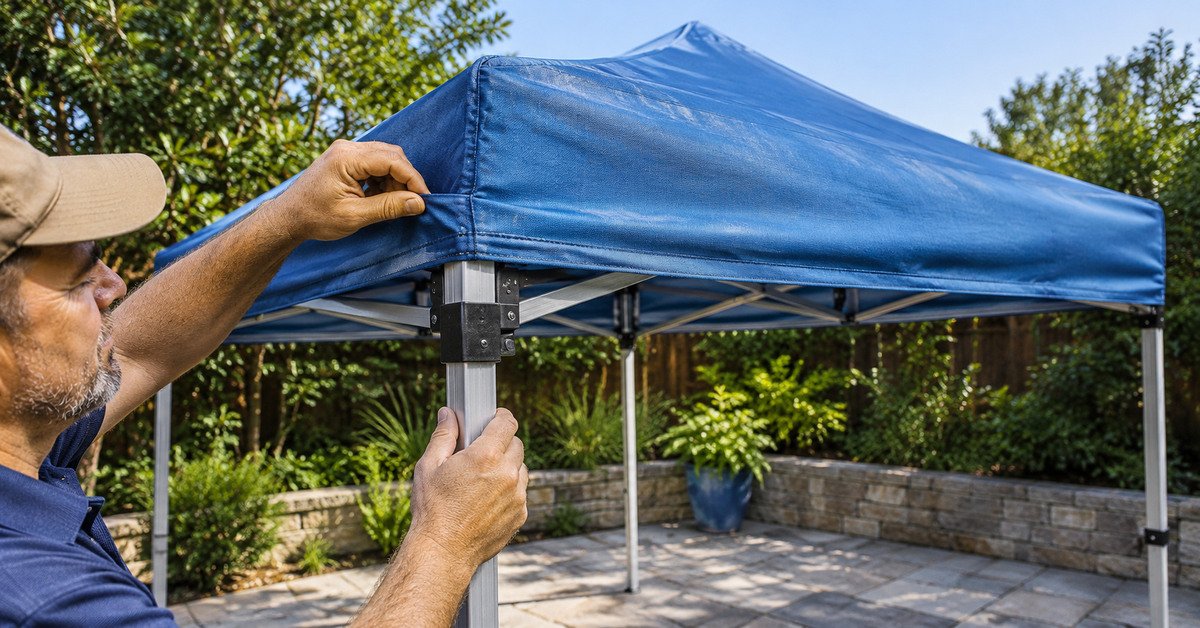
How long do canopy tents last when their roof fabric faces sun and their folding joints face repeated use? A gently used shelter can remain serviceable for years, while frequent exposure can shorten its useful life. The frame, fabric, seams, and hardware seldom wear out at exactly the same rate. Exposure often wears the roof first, while poor handling can damage a frame in one afternoon.
That difference makes inspection more useful than judging a canopy by its purchase date alone. Two tents of the same size can age differently because their setup schedules and storage conditions differ.
Even a strong frame cannot compensate for brittle fabric, damaged connectors, or insecure anchoring. Start by identifying which component is deteriorating and whether the damage affects safe deployment. Then consider the shelter’s materials, local weather, cleaning habits, and replacement-part availability.
Several practical checks reveal whether maintenance can preserve the structure or whether replacement is sensible. This guide separates observable wear from manufacturer warranty terms and unsupported lifespan promises. It also explains which maintenance decisions can reduce avoidable damage between outdoor events.
Jump to a specific section on this article
How Long Do Canopy Tents Last With Different Setup Schedules?
Occasional backyard use generally places fewer folding cycles on joints than a weekly market schedule. However, one unattended storm can cause more damage than many careful deployments. Record how often the frame opens, how long the roof stays exposed, and where it is stored. Those details provide a more useful maintenance history than calendar age alone.
A tent opened a few weekends each year mainly faces wear during handling and outdoor exposure. Inspect the corners when unfolding because trapped fabric can abrade against rigid frame ends. Dry the shelter completely after each outing before returning it to its carrying bag.
A weekly vendor canopy accumulates wear at sliders, hinge pins, feet, and canopy attachment points. Repeated tension also concentrates force around seams, grommets, and hook-and-loop fastening areas. Compare each inspection against earlier photographs to notice small changes before parts fail.
Year-round outdoor placement adds continuous sunlight, moisture, wind movement, and temperature cycling to the equation. Most folding event canopies are intended for temporary deployment rather than unattended permanent installation. For basic shelter selection, the differences in canopy construction help explain why portable models require more frequent checks. Regardless of schedule, stop using the structure if locks fail or load-bearing parts deform.
Do not translate frequency alone into a fixed number of years without model-specific service data. Instead, combine deployment records with inspections of both the fabric and the supporting frame. A clear record helps you replace vulnerable parts before an important event.
Compare Steel and Aluminum Frames Before Estimating Canopy Lifespan
Steel and aluminum behave differently when exposed to moisture, repeated loading, and surface damage. Steel commonly offers substantial stiffness, although specific tube geometry and wall thickness matter greatly. Aluminum avoids ordinary red rust but can still corrode or crack under adverse conditions. Neither material alone predicts service life without details of alloy, joints, design, and maintenance.
Painted or powder-coated steel needs particular attention wherever scratches expose the underlying metal. Water trapped inside hollow sections can remain after the visible frame looks dry. Drying joints and feet reduces prolonged contact with moisture after rain or washing.
An aluminum frame can remain visually clean while its hinges, rivets, or plastic connectors deteriorate. Different metals in contact may also invite localized corrosion when moisture and salts accumulate. Compare structural members by their actual dimensions rather than assuming every steel tube is equivalent. When reviewing models, check manufacturer parts diagrams for replaceable feet, trusses, and sliding connectors.
The folding mechanism usually introduces concentrated loads that straight frame tubing does not experience. Inspect locking alignment, looseness, and unusual movement during each controlled opening. A frame that rocks because of bent supports needs attention before fabric is installed.
Treat published wind claims as condition-specific tests, not predictions of the years a frame will survive. Serviceability and replacement hardware can matter as much as the material label.
Check Steel Canopy Frames for Rust at Joints
Inspect steel joints after damp use because hinges and fasteners retain moisture longer than broad tubes. Look for bubbling paint, orange staining, rough movement, and corrosion around pins or bolt heads. Wipe exposed areas dry and examine scratches where the protective coating has worn through. Surface discoloration requires closer inspection to distinguish superficial staining from section loss.
Never force a rusted lock into position because sudden release can damage adjacent members.
Replace a structural component when corrosion has visibly weakened its load-bearing section.
Before storage, clean grit from joint recesses and allow trapped moisture to escape fully. Check the manufacturer’s instructions before applying a lubricant or corrosion treatment near the fabric. Document recurring rust spots so future checks reveal whether deterioration is spreading.
Inspect Aluminum Canopy Hinges for Fatigue
Aluminum tubing resists red rust, yet bending damage and cracks can still compromise a shelter. Inspect hinge regions where movement transfers force through narrow brackets or drilled holes. Check whether rivets have elongated their openings or shifted away from their original seating. A bright polished mark near a joint can indicate repeated rubbing under load.
Open the frame slowly and watch for unequal movement across matching corner assemblies. Listen for unusual clicking and stop when a slider binds instead of forcing it. Inspect any plastic connectors for cracks, missing pieces, or distorted locking surfaces.
Repeated metal contact can loosen a joint without producing visible surface corrosion. A bent aluminum truss should not be straightened casually because its remaining strength is uncertain. Replacing the matched component is generally safer than improvising a structural repair. Compare the installed bracket against the manufacturer’s drawing before ordering a replacement.
Similar-looking components may use different hole spacing or fastener sizes. After replacement, conduct a controlled ground-level opening before putting the roof under tension. If the repaired assembly still binds, keep the shelter out of service.
Compare Polyester and Vinyl Roof Fabric Wear
Polyester canopy tops and vinyl-based coverings can differ in coating, weight, flexibility, and repair methods. A fabric label does not establish how long the complete roof will stay functional. Exposure and seam construction influence performance alongside the underlying textile.
Polyester shelter fabric often uses a coating to improve water resistance and other functional properties. The coating can deteriorate even when the woven base still appears intact. Vinyl-based covers may handle some abrasion differently but can stiffen or crack under unfavorable conditions. Verify the exact fabric composition because similar product descriptions can describe very different constructions.
A denier number describes yarn mass per length rather than finished roof durability. In practice, the differences between canopies and camping tents clarify why fabric design must match its intended use. Check attachment points because tension loads can tear otherwise sound material.
Look for pinholes against daylight, peeling inner coatings, and fabric that tears with light handling. Inspect seams separately because stitches and seam coatings may deteriorate earlier than broad roof panels. After rain, note whether leakage follows stitch lines, worn panels, or attachment hardware. Choose a repair method compatible with the exact fabric and its finish.
A compatible replacement top can extend the frame’s useful service period. Do not assume a generic roof fits solely because its nominal footprint matches.
Measure actual frame geometry and compare the attachment design before replacing fabric.
Assess How Ultraviolet Exposure Ages Canopy Roof Fabric
Sunlight gradually changes many outdoor polymers, including fabric coatings, thread, and plastic connectors. Visible fading can be an early clue, but color loss alone does not quantify remaining strength. Heat and ultraviolet exposure work together differently across pigments, finishes, and material formulations. A roof left open daily receives far more exposure than one stored after occasional events.
Inspect upper panels and ridge areas where light reaches the surface most directly. Compare sheltered edges against exposed centers to detect uneven weathering. Look for chalking, cracking, brittleness, or flakes on the underside of a coated roof.
A faded surface may still block some sunlight while its mechanical strength has declined. Do not rely on original ultraviolet ratings after significant material deterioration without current supporting evidence. A canopy’s advertised ultraviolet protection concerns the product’s tested or claimed condition, not its future lifespan.
Store fabric in shade when not needed and avoid leaving it stretched outdoors unnecessarily. If solar protection matters, inspect for thinning and holes before every extended outdoor session. Severe fading combined with brittle handling warrants replacing the roof rather than adding another coating.
Keep a replacement canopy’s exact model details with the purchase record for future matching. Replace elastic straps or plastic clips showing ultraviolet cracks rather than relying on brittle attachments.
Shade a replacement roof between events to reduce avoidable exposure.
Understand How Wind Damage Shortens Canopy Tent Life
Wind can lift a canopy, twist its legs, and overload roof attachment points unexpectedly. Even correctly installed weights cannot make a temporary shelter suitable for every forecast. Follow the manufacturer’s weather limitations and dismantle the structure when conditions become unsafe.
A sudden gust creates dynamic forces that differ from the static load of the canopy itself. Inspect legs for permanent bends following any incident involving uplift or tipping. Check footplates and anchoring loops because distorted fittings may no longer hold reliably. Never leave a temporary canopy unattended when storms could develop.
Guy lines, stakes, and weights must match the ground surface and the manufacturer’s directions. For selecting a common footprint, the practical uses of a 10×10 canopy show why site conditions shape setup decisions. Clear water pockets after safe weather conditions return rather than forcing pooled fabric under load.
For airflow, the vented roof on the CROWN SHADES 10×10 Pop Up Canopy Tent, White illustrates one canopy design trade-off. Its roof configuration does not eliminate the need for correct anchoring or prompt storm takedown. Do not transfer a wind rating from another manufacturer, size, or anchoring arrangement. Once a roof has stretched or truss members have bent, future loads may distribute unevenly.
Retire a canopy if a structural joint no longer locks securely after damage. Repairs should use matching parts rather than improvised wire or mismatched fasteners. The safest lifespan improvement is often choosing not to deploy when weather threatens.
Check Canopy Seams and Stitching for Early Failure
Stitching often shows stress first where a canopy roof attaches tightly to the frame. Thread deterioration can appear as skipped sections, loose loops, or torn fabric around needle holes. Inspect every corner, center peak, and reinforced patch before deciding a roof remains sound.
The seam at a heavily tensioned corner faces different loads than a flat center panel. Ultraviolet exposure and repeated wet storage can weaken stitching or surrounding coatings over time. Needle holes may also allow water through even when the seam thread remains intact. Run fingertips gently along dry seams to detect raised thread and irregular joins.
Seam tape can peel from fabric without any visible break in the underlying stitches. Pinholes become easier to identify when the dry roof is held toward daylight. Document the location of leaks before applying any repair products.
Minor seam leakage may respond to an approved sealant after thorough cleaning and drying. Roof attachment tears usually require more attention because they carry structural fabric tension. Repeated leakage after compatible repairs can indicate wider coating deterioration across the panel. An intact stitch line cannot secure fabric that tears readily beside its holes.
Always follow the roof manufacturer’s repair guidance before choosing adhesive or thread. Reject a patch that restricts folding or interferes with the frame’s moving parts. Seam condition should be inspected alongside coating wear rather than in isolation.
Track Canopy Frame Wear From Repeated Folding
Each opening and collapse moves sliders, pins, brackets, and folding trusses under changing loads. Rough handling accelerates wear when users pull against a jammed joint or twisted roof. Repeated cycles can gradually loosen fasteners even without a single visible impact.
Keep hands clear of pinch points and use the opening sequence specified for the model. Inspect sliding sleeves for cracks, deep grooves, and irregular resistance to movement. Check locking buttons for full engagement before raising or lowering adjustable legs. Avoid snapping the frame shut because fabric caught between members can tear.
On slant-leg designs, the actual roof may cover less area than the ground footprint. For fabric replacement, the canopy dimension comparison helps distinguish frame footprints from actual roof coverage. For instance, the EAGLE PEAK E64EPT-02-AZ Blue 10×10 Slant Leg Pop Up Canopy uses an 8×8-foot roof over its wider base.
That geometry makes correct fabric matching especially important after repeated folding. Count deployments in a maintenance log and note any hinge that feels progressively looser. Replace damaged fasteners with the precise manufacturer-approved parts and attachment methods. Use a second person where the instructions require help with controlled frame movement.
A smooth trial opening after maintenance can reveal remaining alignment problems. Stop when binding persists, rather than treating additional force as a repair.
Prevent Canopy Tent Deterioration During Storage
Damp storage can damage roof fabric and hidden frame surfaces between otherwise careful events. Mildew, discoloration, odors, and corrosion often develop where moisture remains trapped after folding. Dry the roof and frame fully before closing either inside a protective bag.
Clean loose dirt from fabric folds because trapped grit can abrade coatings during transport. A cool and dry storage space reduces unnecessary heat exposure and condensation. Keep folded fabric away from sharp frame feet, bolts, and hard hardware edges. Avoid heavy stacking that compresses the same roof folds for extended periods.
Use a protective carrying bag to keep parts together and reduce handling damage. Separate wet anchoring accessories from clean roof fabric until each component has dried. After coastal use, remove salt residue from appropriate surfaces according to manufacturer guidance.
Choose storage locations where insects, rodents, and standing water are less likely. Check the bag periodically for unexpected moisture or new signs of deterioration. At the next setup, inspect locks and seams before stretching the roof over the frame.
A small drying delay now can prevent larger repair work later. Keep model labels and parts information with the shelter for reliable replacement matching.
Maintain Canopy Frames and Fabric for Longer Use
Routine care is most effective when performed immediately after each outdoor event. First remove loose dirt with a soft brush rather than grinding particles into the roof. Wash only with cleaning materials approved for the canopy’s particular coating and fabric. Rinse away residues and allow all components to air dry before storage.
For routine maintenance, the manufacturer’s canopy care instructions recommend mild soap, complete drying, and occasional attention to frame hardware. Avoid washing machines, pressure washers, and harsh chemicals unless documentation explicitly permits them. Check bolts by hand for looseness without overtightening or crushing a frame connection.
A model’s supplied carrying bag can protect the roof and joints during repeated transport. For example, the E-Z UP Vantage 10×10 Royal Blue canopy, model VG3WH10RB illustrates a framed shelter requiring component-specific care. Use the owner’s manual for the exact model rather than transferring instructions between product families. Do not apply an unfamiliar waterproofing spray without checking compatibility and a concealed test spot.
Review damaged roof clips and tension straps before every extended outdoor deployment. Store spare manufacturer-approved hardware in a labeled container to avoid mismatched replacements. A short inspection before transport reduces the chance of discovering a missing pin onsite.
After any harsh weather, repeat structural checks even when the canopy appears intact. Keep dated photographs of damage and repairs to help distinguish new changes from old marks. The most useful maintenance schedule follows exposure and handling rather than an arbitrary fixed interval.
Know When to Repair or Replace an Aging Canopy Tent
Aging alone does not require replacement if every structural component still operates correctly. Start with the specific failure, then assess whether its repair restores reliable function. A localized fabric hole can be different from widespread brittleness or failed frame locks. Compare the replacement part’s exact model and version before ordering new hardware.
Repairs make sense when a sound frame needs a compatible roof or minor approved hardware. Widespread corrosion, cracked joints, and distorted trusses require more conservative decisions. Do not trust a loose locking pin simply because the canopy once stood securely.
Look for roof tears around load-bearing corners rather than judging only the center fabric. Any leg that cannot lock at its intended height presents a deployment concern. A bent truss can shift forces into neighboring joints and damage them further.
| Visible condition | What to inspect | Decision before the next use |
|---|---|---|
| Small, isolated roof tear away from seams | Check nearby fabric for brittleness, weak coating, or additional punctures. | Repair only by a method approved for the roof material, then check the repaired area before reuse. |
| Split roof corner seam or damaged tension strap | Inspect neighboring stitches, corner reinforcement, and attachment points. | Take the damaged roof out of service until a manufacturer-approved repair or correctly matched replacement is fitted. |
| Loose fastener or worn sliding sleeve | Inspect the mating joint, tube alignment, and full locking action. | Fit the precise approved replacement part and confirm smooth opening and secure locking before reuse. |
| Bent truss or leg lock that will not engage | Look for distorted tubes, cracked brackets, or a lock that remains partly open. | Do not deploy the canopy; obtain an approved structural replacement or replace the affected frame. |
| Corrosion around load-bearing joints or cracked connectors | Check whether the joint moves freely and whether structural integrity is compromised. | Keep the shelter out of use until the manufacturer confirms an appropriate repair; replace unsafe components. |
| Roof stored damp or showing mildew | Unfold and examine fabric, seams, coatings, and any persistent weakening. | Clean and dry according to the manual; replace material that remains structurally weakened. |
When comparing replacements, the broader canopy buying and sizing guidance provides context for choosing a different shelter. Retain model identifiers because generic parts may match dimensions without matching the connection geometry. If replacement panels are unavailable, consider the remaining frame only after a qualified compatibility check.
Do not install a roof whose anchors obstruct the folding mechanism. When comparing models, prioritize documented spare-part support and instructions over unsupported lifetime claims. Replacement is the safer choice when damaged structural parts cannot be restored with approved components. For a functional roof with minor seam leakage, assess the coating and follow the specified repair procedure.
Inspect the entire assembly before the next public event instead of assuming one repair solves everything.
Frequently Asked Questions about How Long Canopy Tents Last
How Many Years Can a Canopy Tent Last With Occasional Use?
Several years can be a reasonable planning horizon for a gently used, carefully stored canopy. The actual service period varies because construction and outdoor exposure differ significantly among models. A shelter used for occasional weekend gatherings experiences fewer folding cycles than a weekly vendor tent. That advantage disappears when harsh weather or improper storage damages the components.
Use the first season to establish a baseline for fabric condition and frame movement. Photograph joints, corners, and coatings while the shelter is new and fully assembled. Compare subsequent inspections against those observations instead of trusting a generic lifespan number.
Long periods in storage do not stop mildew if fabric was packed damp. Check hidden fasteners after storage because corrosion may be concealed inside folding assemblies. A serviceable frame can sometimes outlast its original canopy roof.
Can a Canopy Tent Be Left Outdoors Throughout the Year?
Most portable folding canopies should be dismantled between events rather than left outdoors year-round. Continuous exposure accelerates fabric aging and gives storms more opportunities to damage the frame. Follow any model-specific instructions that limit prolonged setup or unattended use. Even securely weighted legs cannot eliminate uplift during severe weather. Choose an outdoor structure designed for permanent installation when uninterrupted coverage is required.
Do Expensive Canopy Tents Last Longer Than Budget Models?
A more expensive canopy does not automatically have a longer measured service life. Compare construction specifications, supported replacement parts, and warranty terms for the exact models. Frame tubing dimensions, connector design, and fabric finish can be more informative than marketing categories. Ask manufacturers for comparable durability testing before treating differences as proven longevity.
Choose the shelter that fits your exposure conditions and expected deployment frequency. Inspect the actual locking mechanisms and repair support before relying on advertised strength. Good cleaning and storage practices remain necessary regardless of equipment tier.
Does a Canopy Tent Warranty Reflect Its Expected Lifespan?
A warranty describes coverage conditions and eligible defects rather than the expected date of failure. Different frame, roof, and accessory components may have separate coverage periods. Normal wear, storms, and misuse are often excluded under the manufacturer’s written terms. Read the document for the exact product version before interpreting any headline warranty duration.
A long frame warranty cannot establish that a fabric top will last equally long. Check whether coverage applies only to the original purchaser and requires proof of purchase. Record the model, purchase documentation, and component photographs while they remain accessible.
For a failed part, describe the damage accurately rather than assuming it qualifies. A repairable defect and a worn-out component may receive different treatment under the policy. Focus maintenance decisions on present condition even while warranty coverage remains active.
How Long Does Waterproof Coating on Canopy Fabric Last?
Waterproofing performance can decline before the underlying fabric develops an obvious tear. There is no reliable fixed service period that applies across different canopy coatings. Abrasion, repeated folding, cleaning chemicals, ultraviolet exposure, and pooling water can affect the finish. Inspect for peeling, flaking, wet patches, and water penetrating the roof during ordinary rain. Identify whether leaks pass through fabric panels or follow exposed seams before attempting repairs.
Use coating-compatible treatment only if the manufacturer’s instructions allow it. Clean and dry the surface fully before applying any approved restoration product. Replace heavily damaged roof fabric when broad coating failure persists after appropriate care.
Can Faded Canopy Fabric Still Provide Adequate Ultraviolet Protection?
Some faded fabric can still provide shade, but fading alone cannot establish ultraviolet performance. A visible color change does not directly measure transmitted ultraviolet radiation through the material. Inspect thin sections, holes, brittle fibers, and peeling coatings alongside the faded appearance. Original protection claims refer to the tested or advertised new product configuration.
Repeated sunlight exposure can change the finish without creating obvious holes immediately. If reliable sun protection matters, replace severely deteriorated fabric rather than guessing from color. Use the manufacturer’s current material guidance when replacement fabric is available.
Shade effectiveness also changes with roof angle, edge gaps, and moving sunlight. Position seating away from uncovered margins during long outdoor sessions. Monitor surfaces for tearing when handling a weathered roof.
A visibly weakened roof should not be trusted for demanding outdoor use.
How Does Coastal Salt Air Affect Canopy Tent Durability?
Salt deposits and humid air can accelerate corrosion at vulnerable fasteners and exposed metal surfaces. Rinse or wipe components according to manufacturer instructions after exposure to salty spray. Dry joints and hollow frame ends thoroughly before placing the canopy into storage. Inspect mixed-metal contacts and damaged finishes more frequently in coastal environments.
Can a Canopy Tent Survive Repeated Freezing Temperatures?
Some canopy materials tolerate cold storage, but freezing conditions can make certain components less flexible. Never force stiff roof fabric, brittle connectors, or a frozen locking mechanism into movement. Allow snow and ice to clear safely before handling a sheltered structure. Follow the specified operating and storage temperature guidance for your exact model.
Accumulating snow introduces loading that temporary event canopies may not be designed to support. Take down portable shelters ahead of freezing storms when the instructions require it. Inspect seams and coating cracks after thawing before using the canopy again.
Can a Replacement Canopy Roof Fit an Older Tent Frame?
A replacement roof may fit an older frame when its measurements and attachment system match exactly. Nominal width alone cannot establish compatibility because truss geometry and roof slopes differ. Identify the original manufacturer’s model code and the frame’s actual roof dimensions. Compare peak height, corner locations, and fastening straps before ordering a replacement.
A slant-leg base may measure larger than the fabric covering its top. Measure the upper frame rather than assuming the ground footprint equals roof size. The safest replacement is a part documented as compatible with that specific frame version.
Before installation, check hardware for wear that could damage new fabric immediately. Do not modify structural connectors merely to stretch an incompatible roof into place. Keep the old roof label until the new part fits correctly.
How Often Should Canopy Tent Components Be Inspected?
Inspect the canopy before every setup and after any incident involving wind, impact, or heavy rain. Check all feet, locking pins, trusses, sliders, and roof attachment points systematically. Look for tears, loose stitching, coating deterioration, corrosion, and damaged fasteners. After cleaning, verify the frame and fabric have dried fully before packing them.
Frequent event use justifies more detailed inspection of moving joints between deployments. Before seasonal storage, record damage and replace missing approved hardware. Inspect again after storage because moisture and pests can cause unseen deterioration.
Use a dated checklist so repeated defects do not become forgotten problems. Keep structural safety checks separate from minor cosmetic staining or fading. Stop deployment if a load-bearing part bends, cracks, or fails to lock.
Regular inspection is more dependable than replacing equipment only by calendar age.
Ready to Explore Canopy Tent Lifespan?
For occasional use, a canopy may serve for years when its roof, frame, and hardware remain sound. Its real lifespan follows weather exposure, folding cycles, maintenance, and the availability of compatible repairs. Inspect the canopy before each event and stop using it when structural damage undermines safe deployment. Store the shelter completely dry, and replace failed components only with properly matched parts.